Precision temperature control is an essential part of pharmaceutical and biotechnology research because many biological materials, chemical reactions, and laboratory processes are sensitive to changes in temperature. Even small temperature variations can influence experimental results, material stability, and the consistency of research procedures. For this reason, laboratories use carefully designed temperature control systems to maintain suitable thermal conditions throughout different stages of scientific work.
Pharmaceutical research involves the development and evaluation of medicines, formulations, active pharmaceutical ingredients, and biological products. Biotechnology research focuses on living cells, microorganisms, proteins, enzymes, and other biological materials. Both fields depend on reliable laboratory temperature control to support repeatable experiments and protect the quality of research materials. Equipment such as laboratory incubators, refrigerated storage units, circulating baths, temperature-controlled chambers, and precision cooling systems helps researchers maintain the environmental conditions required for specific applications.
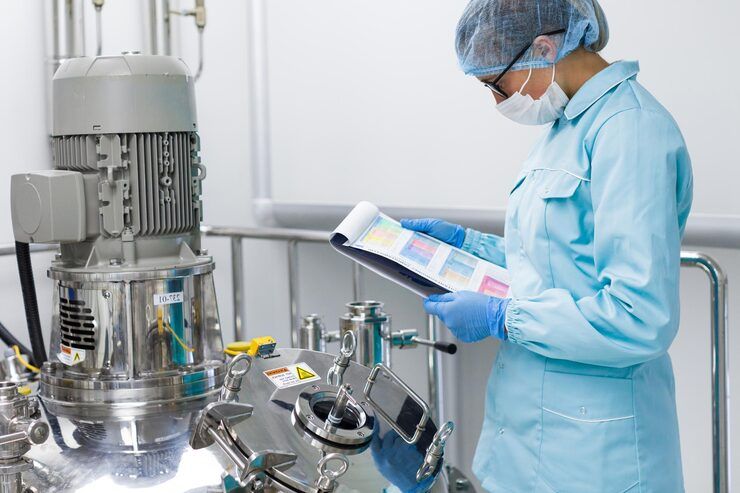
Why Temperature Control Matters in Pharmaceutical and Biotechnology Research
Maintaining the Stability of Research Materials
Temperature can affect the physical, chemical, and biological properties of research materials. Some pharmaceutical compounds may degrade when exposed to unsuitable temperatures, while proteins and other biological molecules may lose their functional structure under certain conditions. Living cells and microorganisms can also respond differently when temperature changes beyond the limits required by a particular experiment.
Precision temperature control helps laboratories establish appropriate environmental conditions for handling and studying these materials. Researchers determine suitable temperature ranges according to the material, experimental method, and applicable protocols. Maintaining those conditions can reduce unwanted variability and support more reliable scientific observations.
Improving Experimental Reproducibility
Reproducibility is a fundamental principle of scientific research. When an experiment is repeated under comparable conditions, researchers expect to obtain results that are sufficiently consistent to support meaningful analysis. Temperature fluctuations can introduce additional variables, making it difficult to determine whether a change in results comes from the research subject or from the surrounding environment.
Temperature-controlled laboratory equipment helps reduce this source of variation. Consistent thermal conditions are particularly important in cell culture, enzyme analysis, chemical reaction studies, stability testing, and biotechnology process development. Researchers can interpret experimental findings more confidently when temperature is monitored and documented throughout the procedure.
Supporting Quality Assurance and Laboratory Compliance
Pharmaceutical and biotechnology laboratories often operate under documented quality systems. Depending on the activity, these may involve good laboratory practice (GLP), good manufacturing practice (GMP), validated procedures, equipment qualification, and applicable regulatory requirements.
Temperature monitoring and calibration support these quality processes by providing evidence that equipment performs within its defined operating limits. Records of temperature readings, calibration activities, alarms, and maintenance can help laboratories investigate deviations and assess their possible effect on research results or stored materials.
Key Technologies Used in Precision Temperature Control
Digital Temperature Controllers
Digital temperature controllers regulate heating and cooling equipment by comparing measured temperatures with a predefined setpoint. When the measured value differs from the target, the controller adjusts the heating or cooling output to bring the system back within its operating range.
Many modern laboratory temperature controllers use proportional-integral-derivative (PID) control. This approach helps reduce temperature fluctuations by adjusting the system response according to the difference between the target and measured values. Controller performance depends on sensor accuracy, equipment design, thermal load, and the characteristics of the process being controlled.
Temperature Sensors and Monitoring Systems
Temperature sensors measure thermal conditions inside laboratory equipment, storage areas, and research environments. Common technologies include resistance temperature detectors (RTDs), thermocouples, and thermistors. Each type has different characteristics relating to measurement range, response time, accuracy, and suitability for particular applications.
Temperature monitoring systems collect measurements at defined intervals and can provide alarms when readings exceed established limits. Data logging is particularly valuable in pharmaceutical laboratories because it creates a record of environmental conditions over time. According to the World Health Organization's guidance on pharmaceutical quality control laboratories, temperature measurement devices should have an appropriate level of quality when temperature directly affects analytical results.
Automated Temperature Control and Data Integration
Automated temperature control connects sensors, controllers, heating or cooling equipment, and monitoring software into a coordinated system. Depending on the laboratory setup, the system may also connect to a building management system (BMS), supervisory control and data acquisition (SCADA) platform, or laboratory information management system (LIMS).
Automation can reduce the need for repeated manual readings and help laboratory personnel identify temperature deviations sooner. Digital records may also support data analysis, equipment performance reviews, and investigations into unusual experimental results. However, automated systems require suitable configuration, access controls, maintenance, and data integrity procedures.
Applications in Pharmaceutical Research
Drug Stability Testing
Drug stability testing examines how the quality of a pharmaceutical substance or formulation changes over time under specified environmental conditions. Temperature is one of the important variables researchers evaluate, alongside factors such as humidity, light exposure, and packaging.
Stability chambers maintain defined environmental conditions for testing pharmaceutical formulations and active ingredients. Researchers use the resulting data to investigate degradation patterns, physical changes, and other quality-related characteristics. Appropriate temperature monitoring helps establish whether the conditions required by the study were maintained throughout the testing period.
Pharmaceutical Formulation Development
Formulation development involves combining active pharmaceutical ingredients with other components to produce a suitable dosage form. Temperature can affect mixing, dissolution, crystallization, viscosity, and other physical or chemical properties.
Precision temperature control helps researchers maintain repeatable conditions during formulation experiments. For example, a controlled heating process may be needed to dissolve certain components, while cooling may be important during crystallization or the preparation of temperature-sensitive formulations. The required operating range depends on the materials and the specific formulation process.
Pharmaceutical Cold Storage
Certain pharmaceutical materials require controlled refrigerated or frozen environments to maintain their intended properties. Laboratory refrigerators, ultra-low-temperature freezers, and monitored cold rooms are commonly used for appropriate research samples and temperature-sensitive materials.
A dependable cold storage arrangement includes more than a temperature display. It may require calibrated sensors, alarms, temperature mapping, documented response procedures, and contingency arrangements for equipment failure or power interruption. Temperature mapping can reveal areas that experience different thermal conditions within the same storage environment.
Applications in Biotechnology Research
Cell Culture and Microbial Research
Cell culture and microbial research depend on environmental conditions suitable for the organisms under investigation. Temperature influences cell growth, metabolic activity, enzyme function, and microbial development. The appropriate conditions vary according to the cell type, organism, and experimental objective.
Laboratory incubators provide controlled environments for these studies. Some models also regulate carbon dioxide, humidity, or oxygen levels when required. Stable temperature conditions can improve consistency between experiments, while regular monitoring helps researchers identify unexpected changes that could affect their observations.
Protein and Enzyme Research
Proteins and enzymes can respond sensitively to temperature changes. Temperature influences reaction rates, molecular interactions, protein folding, and structural stability. Excessive heat may cause certain proteins to lose their functional structure, while unsuitable storage conditions may affect the performance of biological reagents.
Temperature-controlled baths, refrigerated units, incubators, and specialized laboratory equipment help researchers establish appropriate conditions for biochemical experiments. Careful temperature management is particularly relevant when comparing reaction rates, evaluating enzyme activity, or investigating protein stability.
Bioprocess Development and Scale-Up
Bioprocess development involves studying biological systems used in research and the production of biological materials. Temperature may influence fermentation, cell cultivation, enzyme reactions, and other process parameters.
As research moves from small laboratory experiments to larger systems, maintaining similar thermal conditions can become more challenging. Larger vessels may develop temperature gradients because heat transfer depends on vessel geometry, mixing, insulation, and cooling capacity. Temperature sensors and automated control systems help researchers monitor these conditions and understand how process performance changes with scale.
Factors to Consider When Selecting Laboratory Temperature Control Equipment
Temperature Range and Stability
The first consideration is the temperature range required for the research application. Some experiments need controlled heating, others require refrigeration, and some involve both heating and cooling cycles. Equipment should support the required operating range without relying on its maximum specification as evidence of performance under every condition.
Temperature stability describes how consistently a system maintains its target value over time. Temperature uniformity refers to how evenly the temperature is distributed across the usable space. Both characteristics matter, particularly when multiple samples are processed or stored in the same chamber.
Measurement Accuracy and Sensor Calibration
Measurement accuracy determines how closely a recorded value corresponds to the actual temperature. Sensor calibration helps identify measurement errors by comparing instrument readings with an appropriate reference.
Calibration requirements should reflect the intended application, acceptable measurement uncertainty, equipment history, and applicable quality procedures. Laboratories should maintain calibration records and evaluate whether an instrument remains suitable for its intended use. The WHO guidance recommends defining acceptance criteria and determining calibration and verification intervals based on documented performance and need.
Temperature Uniformity and Mapping
A chamber may display the correct target temperature while different areas inside it experience different conditions. Airflow patterns, sample placement, door openings, thermal loading, and equipment configuration can contribute to these variations.
Temperature mapping uses multiple calibrated sensors to evaluate temperature distribution throughout a defined environment. The results can identify warmer and cooler locations and help determine suitable positions for routine monitoring sensors. Mapping plans should reflect the equipment, operating conditions, risks, and acceptance criteria relevant to the particular application.
Equipment Capacity and Environmental Conditions
Laboratories should consider the number and size of samples, expected heat generation, room temperature, ventilation, and frequency of equipment access. A system that performs adequately under light loading may respond differently when filled with samples or operated in a warmer environment.
Energy consumption, noise, maintenance access, alarm functionality, and the availability of replacement components may also affect equipment selection. The most appropriate configuration is one that meets the documented research requirements and can maintain acceptable performance under representative operating conditions.
Best Practices for Temperature Monitoring and Maintenance
Establish Documented Operating Procedures
Standard operating procedures should explain how equipment is used, monitored, cleaned, and maintained. They should also identify acceptable temperature limits, responsibilities, and the actions required when an alarm or deviation occurs.
Clear procedures reduce uncertainty during routine laboratory work and help personnel respond consistently to unexpected events. The documentation should be appropriate to the equipment and the risks associated with the research materials.
Review Temperature Records and Alarms
Regular review of temperature data can help identify recurring fluctuations, slow changes in equipment performance, and unexpected deviations. Monitoring frequency should be appropriate for the application and the potential consequences of losing temperature control.
When a deviation occurs, laboratory personnel should document the event, investigate possible causes, and assess whether the affected samples or experimental results remain suitable for their intended use. Corrective actions should address the underlying issue rather than only resetting the equipment.
Perform Preventive Maintenance
Preventive maintenance helps preserve equipment performance and identify developing problems before they cause significant disruption. Depending on the system, maintenance activities may include inspecting seals, checking airflow, cleaning filters, examining electrical connections, testing alarms, and reviewing sensor performance.
Maintenance schedules should reflect manufacturer guidance, operating conditions, equipment history, and laboratory quality requirements. Any significant repair, relocation, or modification may also require an assessment to determine whether additional calibration, verification, or temperature mapping is appropriate.
Common Challenges in Precision Temperature Control
Temperature Fluctuations
Temperature fluctuations can result from frequent door openings, changes in ambient conditions, uneven sample loading, inadequate airflow, or a control system that is not properly adjusted. These fluctuations may affect experimental consistency or the stability of sensitive materials.
Investigating the timing and location of temperature changes can help identify the underlying cause. Reviewing sensor placement, equipment loading, and control settings may reveal problems that are not apparent from the main display alone.
Sensor Drift and Measurement Errors
Sensors can gradually change their measurement characteristics over time. Incorrect placement, damaged probes, electrical interference, and unsuitable calibration procedures can also lead to misleading readings.
Comparing readings against calibrated reference instruments and maintaining a documented calibration history helps laboratories identify these issues. Measurement uncertainty should be considered when defining acceptable limits, especially when the permitted temperature range is narrow.
Equipment Failure and Data Gaps
Cooling system failures, power interruptions, communication faults, and software problems can interrupt temperature control or monitoring. These events may create gaps in temperature records and make it difficult to establish the conditions experienced by stored materials.
Laboratories can reduce uncertainty by using appropriate alarm systems, checking data recording functionality, maintaining equipment according to established procedures, and preparing documented responses for foreseeable failures. Backup arrangements should be proportionate to the sensitivity of the materials and the importance of the research.
The Future of Temperature Control in Pharmaceutical and Biotechnology Laboratories
Smart Monitoring and Connected Equipment
Connected temperature sensors and digital monitoring platforms are increasingly relevant to laboratory management. Depending on their configuration, these systems can provide remote readings, alarm notifications, historical data, and centralized visibility across multiple pieces of equipment.
Such capabilities can improve awareness of equipment conditions and help personnel identify deviations more quickly. However, connectivity does not automatically guarantee accurate measurements or reliable records. Sensor performance, system validation where applicable, cybersecurity, data integrity, and alarm management remain important considerations.
Predictive Maintenance and Data Analysis
Historical temperature records can help identify patterns associated with equipment degradation or recurring environmental disturbances. Analytical methods may reveal changes in recovery time, fluctuation frequency, or cooling performance that warrant investigation.
Predictive maintenance approaches use available equipment data to support maintenance planning. Their effectiveness depends on data quality, suitable analytical methods, and appropriate interpretation by qualified personnel. They should complement, rather than replace, established maintenance and quality procedures.
Energy Efficiency and Sustainable Laboratory Design
Laboratory cooling and heating equipment can contribute significantly to energy consumption, particularly in facilities operating multiple incubators, cold rooms, and ultra-low-temperature freezers. Efficient insulation, suitable equipment sizing, appropriate setpoints, and regular maintenance can help reduce unnecessary energy use.
Energy efficiency must be balanced with research requirements. Temperature settings should not be changed solely to reduce energy consumption when doing so could compromise sample integrity, experimental validity, or applicable quality requirements.
Conclusion
Precision temperature control is a fundamental element of pharmaceutical and biotechnology research. It supports material stability, reproducible experiments, reliable measurements, and the consistent operation of laboratory equipment. Its applications range from pharmaceutical stability testing and cold storage to cell culture, protein analysis, and bioprocess development.
Effective temperature management combines suitable equipment, accurate sensors, calibration, temperature mapping, routine monitoring, preventive maintenance, and documented procedures. Digital monitoring and data analysis can strengthen these practices when implemented appropriately. By understanding these principles, laboratories can establish more consistent experimental conditions and improve confidence in the quality of their research findings.
Frequently Asked Questions
What is precision temperature control in laboratory research?
Precision temperature control is the regulation and monitoring of temperature within defined limits to support reliable experiments, protect sensitive materials, and maintain consistent laboratory conditions.
Why is temperature monitoring important in pharmaceutical laboratories?
Temperature monitoring helps laboratories determine whether storage and experimental environments remain within their specified limits. It can also provide records for quality reviews, deviation investigations, and equipment performance assessments.
Which equipment is used for laboratory temperature control?
Common equipment includes laboratory incubators, refrigerated cabinets, ultra-low-temperature freezers, stability chambers, circulating baths, temperature controllers, calibrated probes, and automated monitoring systems.
What is temperature mapping in pharmaceutical research?
Temperature mapping is the measurement and analysis of temperature distribution across a defined space over time. It helps identify areas with different thermal conditions and supports decisions about monitoring sensor placement.
How does temperature affect biotechnology experiments?
Temperature can influence cell growth, enzyme activity, protein stability, microbial development, and biochemical reaction rates. The effect depends on the biological material and the specific experimental conditions.
What is the role of calibration in temperature control?
Calibration helps establish the relationship between an instrument's readings and a reference measurement. It supports confidence in temperature data and helps determine whether the instrument meets its intended accuracy requirements.