Industrial chillers are cooling systems designed to remove heat from machinery, industrial processes, liquids, and production environments. They play an important role in industries where temperature control is necessary for product quality, equipment performance, and operational stability. Industrial chillers are widely used in manufacturing facilities, pharmaceutical production, food processing plants, chemical industries, data centers, and commercial buildings.
Unlike ordinary air conditioning systems, industrial cooling systems are often designed to manage continuous heat loads and demanding operating conditions. Depending on the application, an industrial chiller can cool water, glycol mixtures, or other compatible fluids that circulate through equipment and heat exchangers. Understanding industrial chiller types, working principles, energy efficiency, and maintenance requirements helps facility managers and engineers select suitable cooling arrangements for different operational needs.
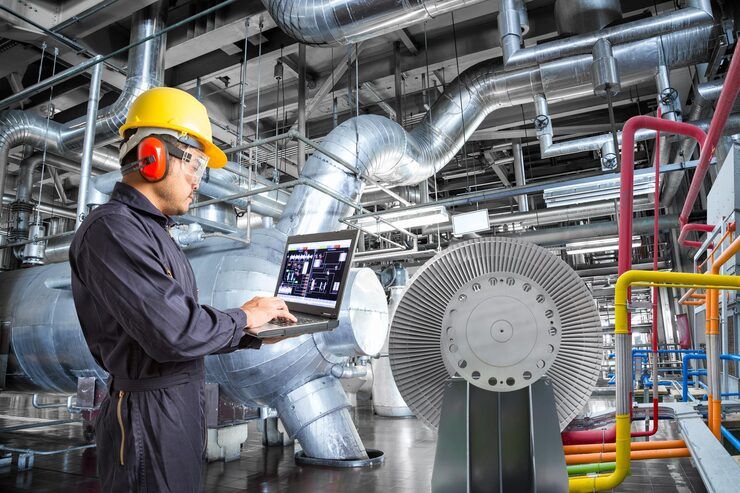
What Is an Industrial Chiller?
An industrial chiller is a refrigeration system that extracts heat from a process fluid and transfers that heat to another medium, such as outdoor air or cooling water. The cooled fluid is then circulated through machinery, production equipment, or process lines to maintain a required temperature.
Industrial chillers are commonly integrated into industrial HVAC systems and process cooling networks. In manufacturing environments, they may support injection molding machines, CNC equipment, laser cutting systems, industrial ovens, and other heat-generating machinery. In commercial buildings, chillers can provide chilled water for centralized air conditioning systems.
The required cooling capacity depends on factors such as the amount of heat generated, operating hours, ambient temperature, fluid flow rate, and the temperature difference between the inlet and outlet. Engineers typically evaluate these conditions before determining the appropriate chiller configuration.
How Do Industrial Chillers Work?
Basic Working Principle of an Industrial Chiller
Most conventional industrial chillers operate through a refrigeration cycle that transfers heat from a colder area to a warmer environment. In a vapor-compression chiller, a refrigerant circulates through four primary components: the evaporator, compressor, condenser, and expansion device.
The process begins in the evaporator, where the refrigerant absorbs heat from the process fluid. As it absorbs heat, the refrigerant evaporates into a vapor. The compressor then increases the refrigerant's pressure and temperature, allowing it to release heat more effectively in the condenser.
Inside the condenser, the refrigerant transfers heat to air or cooling water and changes back into a liquid. The liquid refrigerant then passes through an expansion device, which reduces its pressure and temperature before it returns to the evaporator. This cycle repeats continuously while the chiller operates.
Main Components of an Industrial Chiller
The evaporator is responsible for transferring heat from the process fluid to the refrigerant. Its design may include plate heat exchangers, shell-and-tube heat exchangers, or other configurations selected according to the cooling load and fluid characteristics.
The compressor circulates refrigerant through the system and raises its pressure. Common compressor designs include scroll, screw, reciprocating, and centrifugal compressors. Each type has different operating characteristics and is suited to particular capacity ranges and applications.
The condenser releases the heat collected by the refrigerant, together with the heat generated during compression. Air-cooled chillers use ambient air for this process, while water-cooled chillers transfer heat to a circulating water system.
The expansion valve or expansion device regulates refrigerant flow into the evaporator. It helps establish the pressure difference required for effective refrigeration and supports stable system operation.
Modern industrial chillers may also include temperature sensors, pressure controls, variable-speed drives, pumps, flow switches, and digital monitoring systems. These components help regulate cooling output, protect equipment, and improve energy management.
Types of Industrial Chillers
Air-Cooled Industrial Chillers
Air-cooled industrial chillers reject heat directly into the surrounding air using fans and condenser coils. They generally do not require a separate cooling tower, making their installation comparatively straightforward.
These systems are commonly used in small and medium-sized manufacturing facilities, commercial buildings, laboratories, and applications where cooling-water infrastructure is limited. Their performance depends partly on outdoor temperature, airflow, condenser cleanliness, and the required cooling load.
Air-cooled chillers can be practical where installation simplicity and reduced water consumption are important considerations. However, high ambient temperatures may reduce their cooling performance and increase electricity consumption under demanding conditions.
Water-Cooled Industrial Chillers
Water-cooled industrial chillers transfer heat to circulating water through a condenser. In many installations, the heated water passes through a cooling tower, where heat is released into the atmosphere.
These systems are frequently used in large manufacturing plants, industrial complexes, hospitals, data centers, and buildings with substantial centralized cooling requirements. Under suitable operating conditions, water-cooled chillers can achieve high energy efficiency, particularly in installations with consistent cooling loads.
Their design generally requires additional infrastructure, including condenser-water pumps, piping, water treatment equipment, and often a cooling tower. Water quality management is important because scale, corrosion, and biological growth can reduce heat-transfer performance.
Screw Chillers
Screw chillers use rotary screw compressors to compress refrigerant. They are commonly used in medium-to-large industrial and commercial cooling applications where dependable operation and continuous temperature control are important.
These chillers are found in manufacturing plants, process industries, and large HVAC installations. Depending on the system design, screw compressors can accommodate changing cooling loads and support extended operating periods.
Their efficiency depends on compressor design, operating temperatures, control systems, and the conditions under which the equipment runs.
Scroll Chillers
Scroll chillers use two spiral-shaped elements to compress refrigerant. They are generally associated with smaller cooling capacities and modular systems, although available configurations vary by manufacturer.
These systems can be used in laboratories, small production facilities, commercial buildings, and specialized process cooling applications. Multiple scroll compressors may be combined in a single installation to provide staged cooling and improved capacity control.
Centrifugal Chillers
Centrifugal chillers use high-speed rotating impellers to increase refrigerant pressure. They are typically designed for large cooling loads and are widely associated with centralized cooling plants and large industrial facilities.
Applications include district cooling, major commercial buildings, large healthcare facilities, and industrial processes requiring substantial cooling capacity. Their performance depends on load conditions, condenser temperatures, compressor design, and system controls.
Absorption Chillers
Absorption chillers use heat energy rather than relying exclusively on a conventional electrically driven compressor. Depending on the design, they commonly use water and lithium bromide or ammonia and water as working-fluid combinations.
These systems can be useful in facilities where suitable waste heat, steam, or other thermal energy is available. Applications may include industrial plants, combined heat and power facilities, and large buildings with compatible thermal infrastructure.
Absorption chillers have different operating requirements from vapor-compression systems. Their suitability depends on available heat sources, desired cooling temperatures, installation conditions, and overall energy performance.
Industrial Chiller Applications Across Different Industries
Manufacturing and Machinery
Industrial chillers are essential in manufacturing processes that generate heat during operation. Plastic injection molding, CNC machining, laser processing, metalworking, and other production activities may require controlled cooling to maintain equipment performance.
For example, injection molding systems use cooling circuits to remove heat from molds and help solidify plastic components. Consistent cooling can support repeatable production cycles and dimensional quality. In CNC machining, suitable cooling arrangements can help control temperatures in equipment and associated processes.
Pharmaceutical and Laboratory Applications
Pharmaceutical manufacturing and laboratory environments may require precise temperature control for selected processes, analytical equipment, and specialized production systems. Industrial chillers can provide a stable source of chilled fluid when the application requires it.
The necessary temperature range and control accuracy depend on the equipment and process. In regulated environments, cooling systems may also need documented monitoring, validated procedures, and appropriate contamination-control measures.
Food and Beverage Processing
Food processing plants use industrial refrigeration and process chillers to manage heat during production. Applications may include beverage production, dairy processing, ingredient preparation, and selected cooling stages in food manufacturing.
Maintaining suitable process temperatures can support product consistency and production hygiene. Chiller selection must account for the required temperature range, fluid compatibility, cleaning procedures, and applicable food safety requirements.
Data Centers and IT Infrastructure
Data centers generate substantial heat through servers, networking equipment, and other electronic infrastructure. Cooling systems help maintain environmental conditions that support reliable operation.
Chillers may form part of a centralized cooling arrangement connected to air-handling equipment, computer room cooling systems, or liquid-cooling infrastructure. Energy efficiency is especially important because cooling can represent a significant portion of a data center's total electricity demand.
Chemical and Process Industries
Chemical manufacturing, industrial laboratories, and process plants may use chillers to control reaction temperatures, cool circulating fluids, or remove heat from equipment. Some processes require narrow temperature ranges to support product quality and operational safety.
In these environments, engineers must consider fluid compatibility, corrosion resistance, hazardous-area requirements, and the possibility of unusual heat loads. The chiller's materials and controls should be appropriate for the specific process conditions.
How to Select an Industrial Chiller
Cooling Capacity and Heat Load
Cooling capacity is one of the most important factors in chiller selection. It represents the rate at which the system can remove heat from a process or environment. Capacity may be expressed in kilowatts of refrigeration, refrigeration tons, or other engineering units.
An undersized chiller may struggle to maintain the required temperature during peak demand. An oversized system may experience inefficient cycling or unnecessary capital and operating requirements, depending on its controls and load profile.
Accurate heat-load calculations should consider equipment heat generation, process-fluid flow, temperature difference, operating schedules, and expected future demand.
Required Temperature and Fluid Compatibility
The required leaving-fluid temperature affects chiller design and energy consumption. Lower operating temperatures may require specialized equipment, refrigerants, insulation, and freeze protection.
The process fluid also matters. Water, water-glycol mixtures, and specialized heat-transfer fluids have different thermal properties and compatibility requirements. Engineers should verify that the selected chiller, pump, seals, and heat exchanger are suitable for the intended fluid.
Energy Efficiency
Industrial chiller energy efficiency is often assessed using performance measures such as the coefficient of performance (COP) and kilowatts per refrigeration ton. These measures help compare how much cooling a system produces relative to the energy it consumes.
Actual performance varies with cooling load, outdoor conditions, chilled-fluid temperature, condenser temperature, and auxiliary equipment. A chiller that performs efficiently under one operating condition may be less efficient under another.
Variable-speed compressors, efficient heat exchangers, suitable control strategies, and proper equipment sizing can help improve overall system performance. Evaluating annual operating conditions provides a more useful picture than considering rated efficiency alone.
Installation and Environmental Conditions
Installation requirements include available floor space, ventilation, structural support, piping routes, electrical capacity, noise limits, and access for maintenance. Air-cooled units need sufficient airflow around their condenser coils, while water-cooled systems require appropriate water circulation and heat rejection arrangements.
Environmental considerations also include refrigerant selection, water consumption, noise emissions, and electricity use. Refrigerant requirements vary by location and equipment type, so applicable environmental regulations should be considered during system planning.
Industrial Chiller Maintenance and Energy Management
Routine Inspection
Regular inspection helps identify problems before they significantly affect cooling performance. Maintenance schedules commonly include checking fluid levels, inspecting pumps and piping, reviewing operating pressures, and verifying temperature readings.
Air-cooled systems require condenser coils and air passages to remain clean. Water-cooled systems may require condenser-tube inspection, cooling-tower maintenance, and water treatment to control scale, corrosion, and biological growth.
Maintenance intervals should follow the manufacturer's recommendations and account for operating hours, environmental conditions, and the demands of the process.
Monitoring Cooling Performance
Monitoring supply and return fluid temperatures, flow rates, pressure differences, compressor operation, and electrical consumption can help identify changes in system performance.
A gradual increase in energy use may indicate dirty heat-transfer surfaces, insufficient airflow, incorrect refrigerant conditions, or changing process requirements. Monitoring equipment can help maintenance teams identify abnormal patterns and investigate the underlying causes.
Improving Energy Efficiency
Industrial chiller efficiency can often be improved through a combination of equipment maintenance, control optimization, and system-level planning. Keeping heat exchangers clean and maintaining the correct fluid flow can support effective heat transfer.
Other measures include reducing unnecessary cooling demand, using variable-speed equipment where appropriate, optimizing chilled-water temperature settings, and coordinating chiller operation with pumps and cooling towers.
Waste-heat recovery may also be practical in selected facilities. The feasibility depends on the temperature and timing of available heat, the plant's thermal requirements, and the design of the wider energy system.
Common Industrial Chiller Problems
Industrial chillers can experience reduced cooling capacity, unusually high energy consumption, refrigerant leaks, abnormal vibration, and inconsistent fluid temperatures. These symptoms may arise from different underlying causes, so diagnosis should be based on operating data and appropriate technical inspection.
Poor heat rejection can result from dirty condenser coils, inadequate airflow, cooling-tower problems, or elevated ambient temperatures. Low fluid flow may be associated with pump issues, blocked filters, closed valves, or piping restrictions.
Control faults and sensor errors can also cause unstable operation. Refrigeration-system inspection and repairs should be performed by appropriately qualified personnel, particularly when work involves electrical equipment, pressurized components, or refrigerants.
Preventive maintenance, correct installation, and suitable operating settings can reduce avoidable interruptions and help maintain consistent cooling performance.
Industrial Chillers and Sustainable Cooling
Energy efficiency and environmental performance are increasingly important considerations in industrial cooling. Chillers consume electricity, and their overall environmental impact depends on energy sources, equipment efficiency, refrigerant characteristics, and operating practices.
Modern system designs may incorporate variable-speed technology, improved heat exchangers, advanced controls, and refrigerants selected to meet applicable safety and environmental requirements. Some facilities also investigate thermal storage or heat recovery to coordinate cooling demand with wider energy needs.
Sustainable cooling requires a system-wide approach rather than focusing only on the chiller itself. Pumps, cooling towers, distribution piping, insulation, and control strategies can all influence total energy consumption and operating performance.
Conclusion
Industrial chillers are important components of modern manufacturing, commercial HVAC, laboratory operations, data centers, and process industries. By removing unwanted heat from fluids and equipment, they help maintain controlled operating temperatures and support consistent production conditions.
The main industrial chiller types include air-cooled, water-cooled, screw, scroll, centrifugal, and absorption systems. Each has different operating characteristics, capacity ranges, infrastructure requirements, and energy considerations. Choosing the appropriate system requires evaluating cooling capacity, temperature requirements, process-fluid properties, installation conditions, and expected operating patterns.
Regular maintenance, performance monitoring, and energy management are equally important for dependable operation. A well-designed industrial cooling system can support equipment reliability, process stability, and more efficient use of energy over its operating life.