Industrial powder coating is a dry finishing process used to create a durable protective and decorative layer on metal surfaces. Unlike conventional liquid coatings, powder coating uses finely ground particles that are electrically charged and applied to a prepared surface. The coated component is then heated so that the powder melts, flows, and forms a continuous finish.
The technology is widely associated with industrial manufacturing, automotive components, appliances, machinery, electrical enclosures, furniture, construction components, and metal fabrication. Industrial powder coating can provide resistance against corrosion, abrasion, chemicals, moisture, and everyday wear when the appropriate powder formulation and application process are selected.
Why Industrial Powder Coating Matters
Surface Protection
Metal components can be exposed to humidity, chemicals, temperature changes, abrasion, and other environmental conditions. A properly applied industrial coating can create a protective barrier between the substrate and its surroundings. This makes surface protection an important consideration in manufacturing and industrial maintenance.
Durability and Appearance
Powder coatings are available in different colors, textures, gloss levels, and finishes. Manufacturers can select coating characteristics according to the intended application. A properly cured coating can maintain its appearance while providing resistance to common forms of mechanical wear.
Efficient Industrial Finishing
Industrial finishing processes need consistent coverage and repeatable results. Powder coating systems can be integrated with preparation, application, curing, inspection, and material-handling stages to support production environments where consistent surface quality is important.
How Industrial Powder Coating Works
Surface Preparation
Surface preparation is one of the most important stages of powder coating. Oil, grease, dirt, rust, scale, and other contaminants can interfere with adhesion. Depending on the substrate and application, preparation may involve cleaning, chemical treatment, abrasive blasting, or other surface-treatment methods.
Powder Application
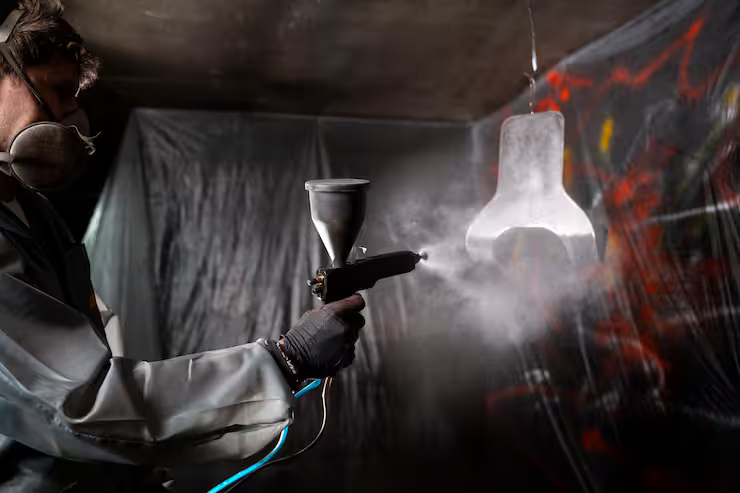
During application, powder particles are generally given an electrostatic charge. The grounded workpiece attracts the charged particles, helping the powder adhere to the surface. Spray equipment is used to distribute the powder across the component.
Curing Process
After application, the coated component enters a curing oven. Heat causes the powder particles to melt and flow together, creating a continuous film. The curing schedule depends on the powder chemistry, component thickness, oven characteristics, and manufacturer's technical specifications.
Inspection and Quality Control
The finished component can be inspected for coating thickness, adhesion, appearance, coverage, curing quality, and surface defects. Industrial quality control helps identify problems such as uneven coverage, pinholes, poor adhesion, contamination, and under-curing.
Types of Industrial Powder Coatings
Epoxy Powder Coating
Epoxy powder coatings are known for their strong adhesion and resistance to chemicals and corrosion. They are commonly considered for indoor industrial applications where exposure to sunlight is limited.
Polyester Powder Coating
Polyester powder coatings are widely used where weather and ultraviolet resistance are important. They are commonly found on outdoor metal components, architectural products, and various industrial applications.
Epoxy-Polyester Hybrid Coating
Hybrid powder coatings combine characteristics of epoxy and polyester technologies. They are frequently used for indoor applications such as electrical equipment, appliances, fixtures, and general industrial components.
Polyurethane Powder Coating
Polyurethane powder coatings can provide a smooth finish and good resistance to environmental and mechanical conditions. They may be selected for applications where appearance and performance are both important.
Industrial Powder Coating Equipment
Powder Spray Guns
Electrostatic powder spray guns are used to apply coating particles to the prepared substrate. Application parameters can be adjusted according to the component geometry, powder formulation, and required coating thickness.
Powder Recovery Systems
Recovery systems collect unused powder from the application area. Depending on the system design and powder type, recovered material may be managed according to the manufacturer's specifications and applicable quality requirements.
Curing Ovens
Industrial curing ovens provide controlled temperatures required for the coating to properly cure. Oven design, temperature uniformity, airflow, and conveyor speed can influence the final coating quality.
Pretreatment Systems
Pretreatment equipment prepares metal surfaces before powder application. These systems can include cleaning, rinsing, chemical treatment, drying, and other stages designed to improve coating adhesion and corrosion protection.
Applications of Industrial Powder Coating
Automotive Components
Powder coating is used for various metal automotive components and accessories. Its combination of durability, appearance, and resistance characteristics makes it suitable for numerous manufacturing applications.
Industrial Machinery
Machine frames, brackets, housings, guards, panels, and other fabricated components can use powder coating as part of their surface-finishing process. The selected coating needs to match the operating environment and performance requirements.
Electrical Equipment
Electrical cabinets, enclosures, control panels, and related metal components may use powder coatings for surface protection and appearance. Coating specifications should consider the environmental conditions surrounding the equipment.
Construction and Architectural Components
Metal doors, window frames, structural components, railings, and architectural products can use powder coating. Outdoor applications generally require coating technologies with suitable weathering and ultraviolet resistance.
Metal Furniture
Office furniture, shelving, storage systems, and other metal products can be powder coated to provide a consistent decorative finish and protection against everyday handling and wear.
Factors That Influence Powder Coating Quality
Substrate Selection
Steel, aluminum, galvanized metal, and other substrates can require different preparation methods and coating considerations. Understanding the substrate is essential when developing an industrial finishing process.
Coating Thickness
Coating thickness affects appearance and performance. Excessive or insufficient thickness can create quality problems, so manufacturers generally establish suitable thickness ranges for individual applications.
Curing Temperature
Correct curing is essential for achieving the intended coating properties. Temperature and time need to be controlled according to the powder manufacturer's technical requirements rather than relying only on oven temperature readings.
Environmental Conditions
Humidity, temperature, contamination, storage conditions, and handling procedures can affect powder coating quality. Maintaining controlled production conditions can help reduce surface defects and inconsistent results.
Powder Coating Compared With Liquid Coating
| Feature | Powder Coating | Liquid Coating |
|---|---|---|
| Application form | Dry powder | Liquid |
| Curing | Heat-based | Varies by coating technology |
| Finish options | Wide range | Wide range |
| Typical substrate | Mainly metal | Metal and other substrates |
| Overspray management | Powder recovery may be possible | Requires liquid overspray management |
| Application environment | Controlled industrial area | Controlled industrial area |
| Common applications | Machinery, appliances, automotive and metal components | Industrial, architectural and specialized coatings |
The appropriate technology depends on the substrate, component dimensions, required appearance, operating environment, production volume, and performance requirements.
Advantages of Industrial Powder Coating
Consistent Finish
When application and curing conditions are properly controlled, powder coating can produce an even and consistent surface finish across large production runs.
Mechanical Resistance
Many powder coating formulations provide good resistance to impact, abrasion, and everyday handling. The actual performance depends on the specific chemistry and application conditions.
Corrosion Protection
Powder coatings can contribute to corrosion protection when combined with appropriate surface preparation and pretreatment. For demanding environments, coating systems may be designed with multiple protective stages.
Design Flexibility
Powder coatings are available in numerous colors, textures, gloss levels, and surface effects. This allows manufacturers to select finishes according to functional and aesthetic requirements.
Challenges in Industrial Powder Coating
Complex Component Geometry
Deep recesses, sharp edges, internal surfaces, and complex shapes can make uniform powder application more difficult. Application parameters and equipment configuration may need adjustment.
Heat-Sensitive Materials
The conventional curing process requires elevated temperatures. This can limit the use of traditional powder coating on substrates that cannot tolerate the required curing conditions.
Surface Defects
Dust, contamination, poor preparation, improper application, and incorrect curing can produce defects such as orange peel, pinholes, craters, uneven coverage, or poor adhesion.
Quality Control in Industrial Powder Coating
Quality control should begin before coating application and continue through final inspection. Surface preparation, powder storage, application parameters, coating thickness, oven temperature, curing conditions, and finished appearance can all be monitored.
For critical industrial components, manufacturers may also perform adhesion, impact, abrasion, corrosion, thickness, and other performance tests according to relevant specifications and application requirements.
Future Trends in Powder Coating Technology
Industrial powder coating is continuing to develop through improvements in coating chemistry, application equipment, curing technology, automation, process monitoring, and environmental management. Automated spray systems can improve repeatability in high-volume manufacturing, while advanced curing technologies are being developed for more efficient processing.
Digital monitoring and automated quality-control systems are also becoming increasingly relevant in modern manufacturing environments. These technologies can help manufacturers identify process variations and maintain consistent coating quality.
Conclusion
Industrial powder coating is an important surface-finishing technology for protecting and improving metal components used across manufacturing, automotive, construction, electrical equipment, machinery, and other industries. The overall result depends on several interconnected stages, including substrate preparation, powder selection, electrostatic application, curing, and quality inspection.
Choosing the appropriate coating chemistry and maintaining controlled processing conditions are essential for achieving the desired durability, appearance, adhesion, and corrosion resistance. As industrial manufacturing becomes increasingly automated, powder coating technology is expected to remain an important part of modern metal finishing and surface protection.